
Why I Do This Show
I want to address a frequent criticism we get. To do that, I want to tell you the story of why I am doing this podcast.

By now you know we invite all kinds of guests on our show.
The criticism we hear most often about our pod is simple: ‘You let misinformation go unchallenged’. People ask whether we’ve confused curiosity with a type of complicity.
To answer that, I want to start with the ‘why’ of Why Should I Trust You? – explain why we started the show.
What follows are my own reflections and does not necessarily represent the opinions of my co-hosts. I hope it will shed some light on how I view this journey.
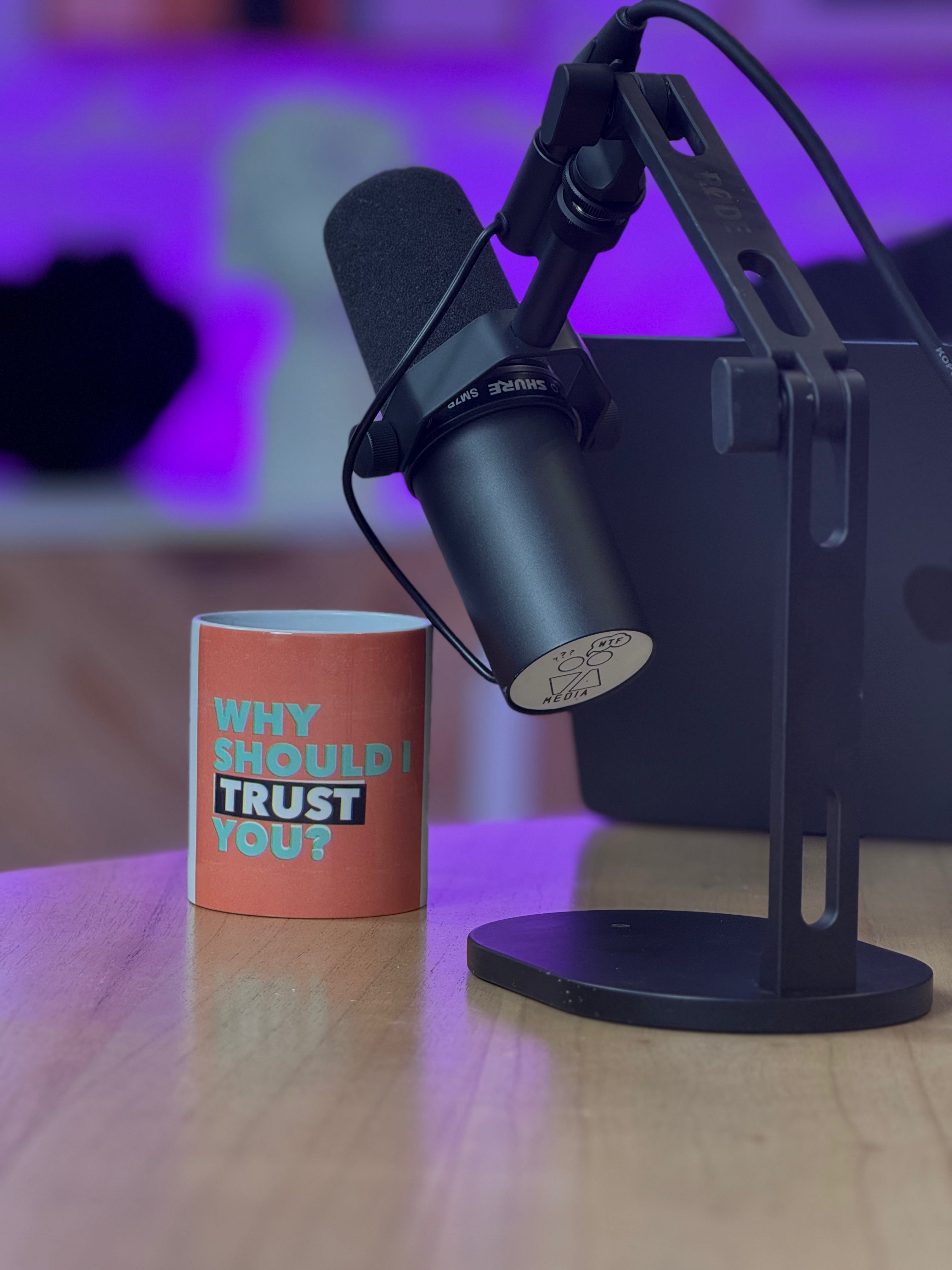
Why We Did This
When Tom, Maggie, Dr. Mark and I first started thinking about Why Should I Trust You? we were imagining it as a multipart docuseries that would serve as a reckoning about the Covid pandemic. It was the summer of 2024, and we were a mere 6 months away from the 5 year anniversary of what was one of the defining tragedies in modern American history. We were going to try to raise money from documentary film studios and health foundations and produce a series of 5 one hour-episodes looking at how Covid ripped us apart as a country, resulting in a crisis of mistrust and how we were going to move forward. Tom and I had been journalists and producers for decades and had experience in doing stuff like this. If we were lucky, maybe a Netflix or a Peacock or a Hulu would pick it up.
At first, we called dozens of public health experts, doctors, and professors. I remember us only talking to the experts at first. At the time, it seemed like the most obvious place to start. We asked them why they thought there was mistrust for science and public health. Almost all of them said: “Misinformation.” That there was a calculated attack on the field of medicine, public health and science and that that was the main driver of mistrust. These scientists and doctors were raw, they were angry and many seemed truly at a loss for how to move forward.
Mis/disinformation is real. It accurately describes a form of weaponry that was used to generate mistrust and even harassment towards many experts. I have read things said about scientists and doctors that are at best wrong and at worst, dangerous lies and threats that have frequently needed law enforcement intervention.
But two things happened that made us change course, start over, and to be perfectly honest, shift my world view entirely from how I was looking at this project to what it has now become. One was something Dr. Francis Collins told us in a conversation. And the second was the election of 2024.
‘Don’t Preach To the Choir’
Dr. Francis Collins, the former head of the NIH, was kind enough to have several conversations with us over zoom as we were developing this docuseries. He told us about his experience during the pandemic, what he thought he did right, what he thought he did wrong, what worried him moving forward.
As we were hanging up a zoom call, I remember him telling us: “By the way, if you’re just going to make another film that is only going to be seen by liberals or only by public health experts, don’t bother. We can’t keep preaching to the choir. We have enough outlets that do that. You need to reach a different audience. The ones who don’t trust us.”
I remember thinking about that for a long time.
I am a lifelong Democrat. I have worked in mainstream news, which has skewed liberal. I live in Brooklyn, NY and everyone in my friend and family circle with very few exceptions pretty much thinks like me about stuff. At this point, I was only reading and listening and watching things that were in my left-coded media ecosystem. It truly never occurred to me to think about reaching a different audience. Making the film and getting it out there seemed good enough.
‘We Need To Make This A Podcast’
Then came the election of 2024.
I remember sitting on the couch with my husband along with my best girl friend, watching the returns, while slowly eating a bowl of popcorn that was beginning to taste like styrofoam. Kamala Harris was losing.
A few hours later, it was over.
Over the next few weeks, I read the news. The post mortems. The lessons learned. One lesson kept coming up: We aren’t reaching people who aren’t like us. That this election is a referendum on institutional consultant-class ways of thinking. That the Democrats were increasingly a party of the educated and well-off.
And something else had happened related to our work: it became clear that Donald Trump was going to pick RFK Jr. as his head of Health and Human Services.
Tom and I talked. We said, screw the film. We need to have something nimble, agile, capturing this moment of anti-establishment fervor, that was about to explode onto the health space due to the rise of RFK Jr. and a movement we were just beginning to learn about, Make America Healthy Again.
So we said, let’s do a podcast. Only this time, we aren’t going to start by only talking to science and medical experts. We are going to talk to regular everyday people to learn about how they make health choices in their lives, why they didn’t trust mainstream health, and what they were looking for from systems. We were intrigued by this MAHA movement. A whole movement organized around mistrusting the health system?
We decided to be very direct: we would call the podcast Why Should I Trust You?
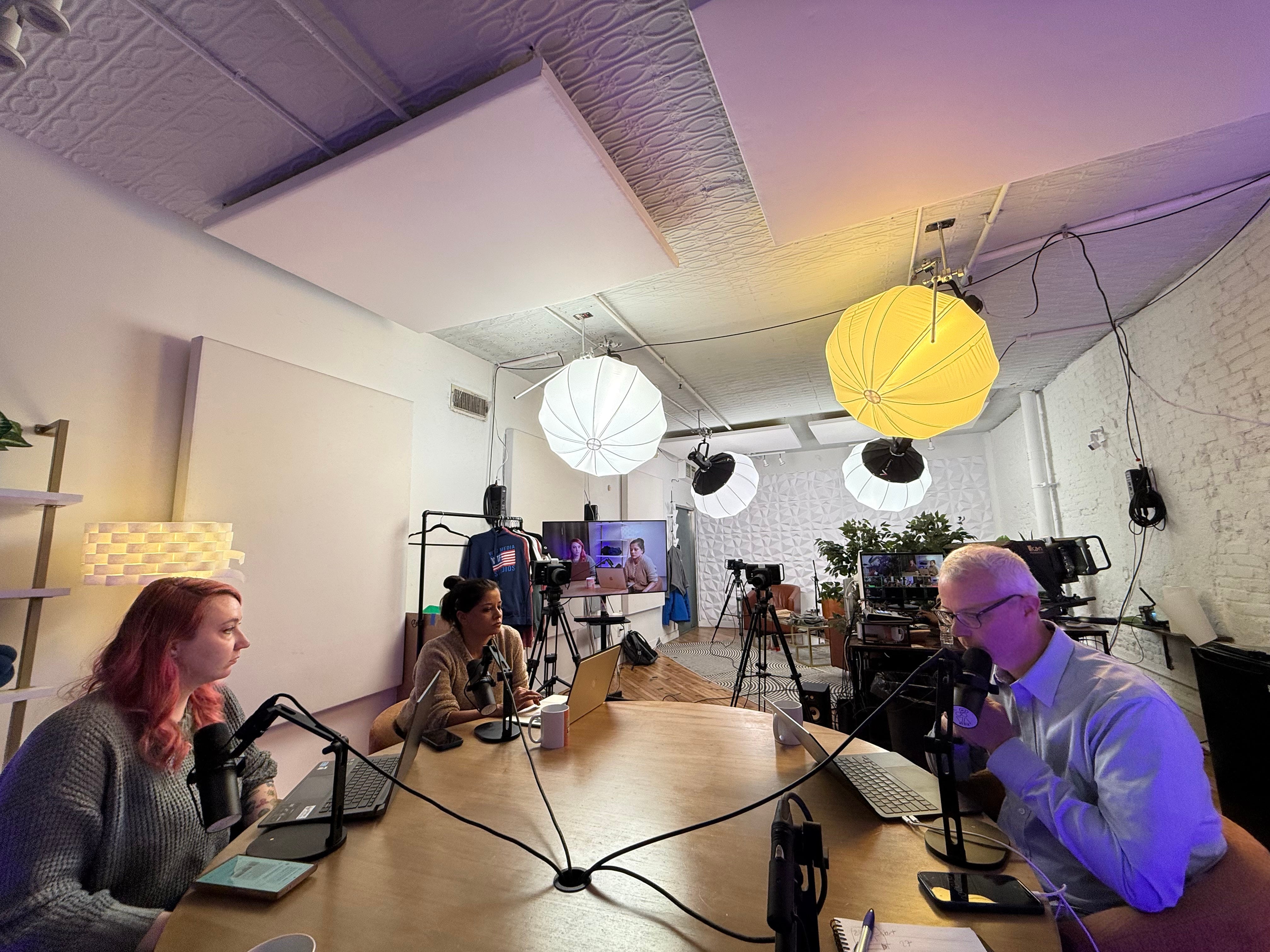
Our First Episode
The first person we called was someone I had read about in a news article: a 50-something year old woman from Atlanta, Georgia named Melinda Hicks. She was a lifelong Democrat who in 2024 voted for a Republican for the first time. Why? “Robert F. Kennedy Jr,” she said. We asked her if there were other people she knew like her. She laughed. She said: “Oh yeah. Tons.”
Pretty soon, we were talking to dozens of people just like Melinda: lifelong Democrats who voted for Trump – because of their love of Robert F Kennedy Jr. And their deep frustrations with the medical and public health system in the US.
We talked with them for hours at a time, on the phone. I wanted to understand how they got to where they did. What media they consumed. What was their life like? I told them about my life. About my kids. About my relationship to vaccines and medicine. I opted to take vaccines because I believed they worked and had no issues taking them. But I had a lot of problems with the health care system. I didn’t have good insurance and avoided going to the doctor. Many of them said that they did too. They described wanting to think about health in their lives, and not just when they are sick. But when they are well. To be in control of what they put into their body. To a tee, people would bring up health in a way I wasn’t used to talking about. About soil, about vegetables, about pollutants, about corporations trying to take advantage of them. Hospitals and exam rooms weren’t the focus of their health vision. School lunches, farms, alternative medicine and grocery stores were.
Many of them were avid listeners of Joe Rogan’s podcast. So I started listening. During one 3-week stretch, I listened to about 40 episodes in a row. It occurred to me that the Joe Rogan Experience could easily be described as a health podcast – it seemed like nothing animated that man more than the topic of health and Covid. I calculated that about 60% of the 40 episodes I listened to had long stretches of conversation devoted to the pandemic and his experience with it, more often than not, his anger towards scientific and medical experts.
Melinda Hicks was our first guest on the podcast. A MAHA mom. Not a scientist or a doctor. We debated that for a long time. How do we want to debut our show? We decided to go with Melinda because we wanted start off by reflecting the sentiment that there is a group of people out there in America who are increasingly losing trust for public health and the healthcare system in this country. And they now have a movement organized around that mistrust headed by a charismatic figure who speaks to them. Many of them said at the time they didn’t love the fact that Kennedy aligned himself with Trump. But they said they felt so alienated by the Democrats during Covid and during this election that in many cases they said they “held their nose” and pulled that lever for Trump.
Do We Platform Misinformation?
Which brings us to the central criticism of our show: do we platform misinformation?
Over the last 18 months, we have hosted over 30 conversations between MAHA and public health, or other groups of people that are sometimes seen as in opposition to each other on issues regarding health. We have built relationships with scores of doctors, public health, scientists, community health workers, nurses, lawmakers, farmers. Many of these folks are grassroots supporters of MAHA. Many very much are not. I am proud that we have built a space where people from very different viewpoints feel welcome to come share their thoughts. At a time when people are siloed in their media echo chambers, we have a show that people across partisan divides listen to, and then share within their networks.
The conversations are not easy. Many of you have heard them. Many of you tell us you get frustrated when you listen to them. For instance, someone says they are nervous that vaccines caused their son’s autism. Why don’t we correct them right away, that vaccines don’t cause autism? Someone says they don’t believe in studies or expertise from certain scientists, that truth is subjective and someone’s lived experience is just as important. Why don’t we jump in and say ‘no it’s not’? Why do we talk to known spreaders of falsehoods?
I understand that every minute someone spends making a false claim is a minute in which listeners may absorb something inaccurate. That responsibility weighs on me every episode.
As a journalist, I have a few choices. One is to go full Mike Wallace and challenge them from the get go. You come in with a prepared set of questions, you go through it. You challenge and even argue. You leave. You potentially never see them again. When we interview powerful leaders, we have taken this approach while maintaining civility. We believe it is absolutely within our right to challenge and hold the powerful to account.
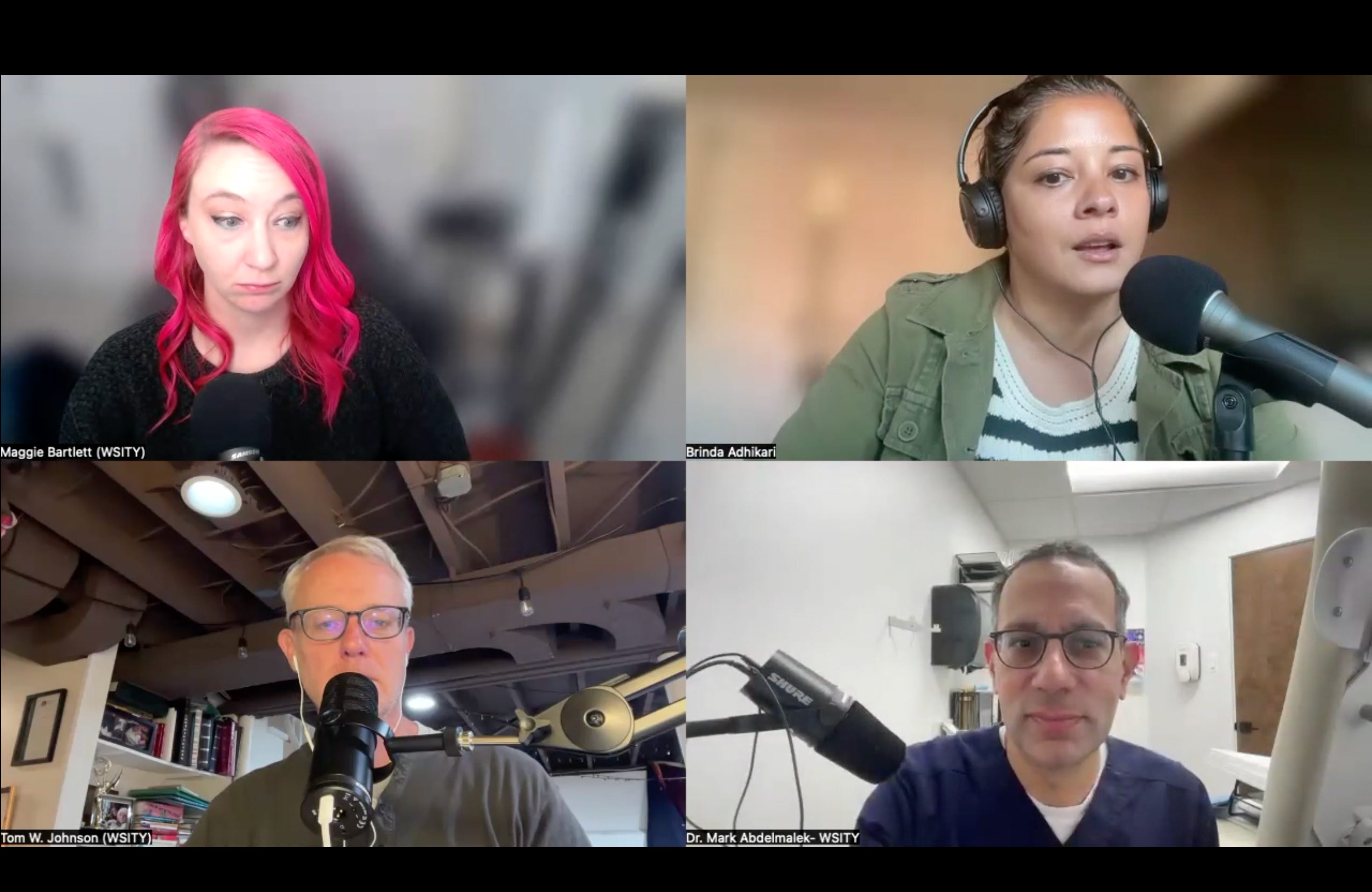
But with people who don’t wield power, my option is to maintain a radical curiosity. My first instinct is to understand why someone thinks what they do before deciding how and when to challenge what they’re saying. Because I worry if we misunderstand why trust broke down, we’ll build the wrong solutions. We can publish all the correct information in the world, but it won’t matter if people have stopped listening.
Our goal isn’t to create a space where every claim is just aired and goes unchallenged. It’s to create a space where we first understand why someone believes something before deciding how best to engage it. Sometimes that means questioning it in the moment. Sometimes it means bringing in another host to move the conversation in a new direction. Sometimes it means adding context ourselves. Sometimes it means acknowledging that a claim is unsupported while continuing the conversation because the belief itself tells us something important about the breakdown of trust. Understanding a belief is not the same as endorsing it. But if we never understand it, we have little chance of changing it.
And thinking back to Dr Collins’ challenge to us to build a new audience: the truth is in order to build relationships and truly appeal to a different audience than your own tribe, people have to see themselves in what you do. That means talking about the issues, experiences, and yes, inviting guests that sometimes align with their values and not mine, all shaping how they think about health—not just driving it towards the conclusions we hope they’ll reach.
Behavioral scientists for years have said that trust is not built through information being given. But through relationships built.
So then I find myself asking what does it mean to build a relationship? Can you build a relationship with someone if you’re constantly fact checking them? Where I think I land on this is sometimes an immediate correction closes people down before you understand them. But sometimes immediate correction is absolutely necessary. The challenge is discerning which moment you’re in.
If I am not listening to their answers and am always in correcting mode, I am not staying present in the conversation. If I immediately debated one mom’s concern about vaccines, I wouldn’t have been able to hear about a negative experience at the doctor that cemented her doubts about vaccines (She and I later spoke off the podcast about why I believed vaccines were safe and we had a really healthy conversation. But I also told her I knew she loved her son very much. And it was clear she wanted to do everything she could to protect him).
If I immediately jump in to correct someone about their fears about myocarditis and the vaccine, I miss the part where they talk about how they actually stopped going to a doctor because it cost too much under their insurance. If I’m always ready with the factcheck, I miss the chance to truly learn something way bigger and potentially more instructive for public health and others.
There was an instance where one guest was stating a claim that was patently false about what happened inside one’s body when a particular vaccine entered it – I steered the conversation by saying ‘I know there are scientists who dispute that. And I know you will likely stick to what you are saying. I’d like one of the scientists to respond but I suggest we then move on’. That moment reminded me that intervention isn’t binary. It isn’t only “say nothing” or “cross-examine.” Sometimes the right editorial choice is to acknowledge the dispute, make listeners aware there is one, and continue exploring why the person believes what they believe.
Sometimes it feels like I live inside the tension between journalism and trust brokering. The two don’t always seem compatible. One seems centered on information building and sharing. The other is centered on relationship building. Sometimes I’m doing both. Sometimes I’m doing more of one and not the other. To me, both are vital.
I’m Still Learning
What our show does is strange. We know it. We are one of the few places where people who think vehemently differently from one another actually come to the same platform to share space. Sometimes it’s awkward. Sometimes it’s tense. Sometimes we laugh. A few times we have cried. We mostly always learn something. But more than anything, we marvel that we actually even did it.
I am still learning. There are interviews I would probably do differently today. Not because I’ve abandoned the philosophy of listening, but because I’ve learned there are moments when listeners need more context than we provided. Do I go back and listen to some episodes and wish I had intervened and asked a question instead of letting someone go on a long monologue about something, often riddled with questionable facts, for quite so long? Absolutely. Are there certain episodes where I think we didn’t let the public health side of things explain their point of view quite enough and we encouraged them to listen more than intervene, because that was a big piece of feedback from pandemic days, that institutions needed to listen more. Yes, in the early days of our show that was definitely the case. I remember talking with a few public health folks afterwards saying: “I think you all can definitely talk more, don’t be afraid. Be honest, share your truth.”
I know we rub many of you the wrong way. The show may not be for you. For me, creating something that can actually be listened to by people from different sides of the political aisle feels vital and urgent. We don’t live in shared realities anymore. For instance, when the CDC shooting happened, friends in public health asked me to text my “MAHA friends” to see what they thought about it. Public health was understandably raw, after the historic destruction of scientific infrastructure – and now a shooting?
I texted a few friends in MAHA asking them about it. What surprised me wasn’t what they thought. It was that they hadn’t seen it at all. Because the story hadn’t shown up on their timelines. Their media ecosystem showed them other news. As soon as they heard, those MAHA friends did in fact post about it and expressed their shock and anger over it.
For people as different as MAHA and public health to actually listen to the same show because they both feel their values surfaced at different times, at times feels impossible but it mostly feels like a step in the right direction. It’s led to a few MAHA supporters telling us they are beginning to trust public health again. It’s led to a few collaborations we are proud of. But most of all? It’s led to so many relationships and trust pathways. Meet ups with new people. Group chats and trips on the road with all kinds of new faces and perspectives. For now, we keep on keeping on. We have big dreams and ambitions. Stay tuned.
That’s the work we’re trying to do. We won’t always get it right. But I think it’s work worth doing.
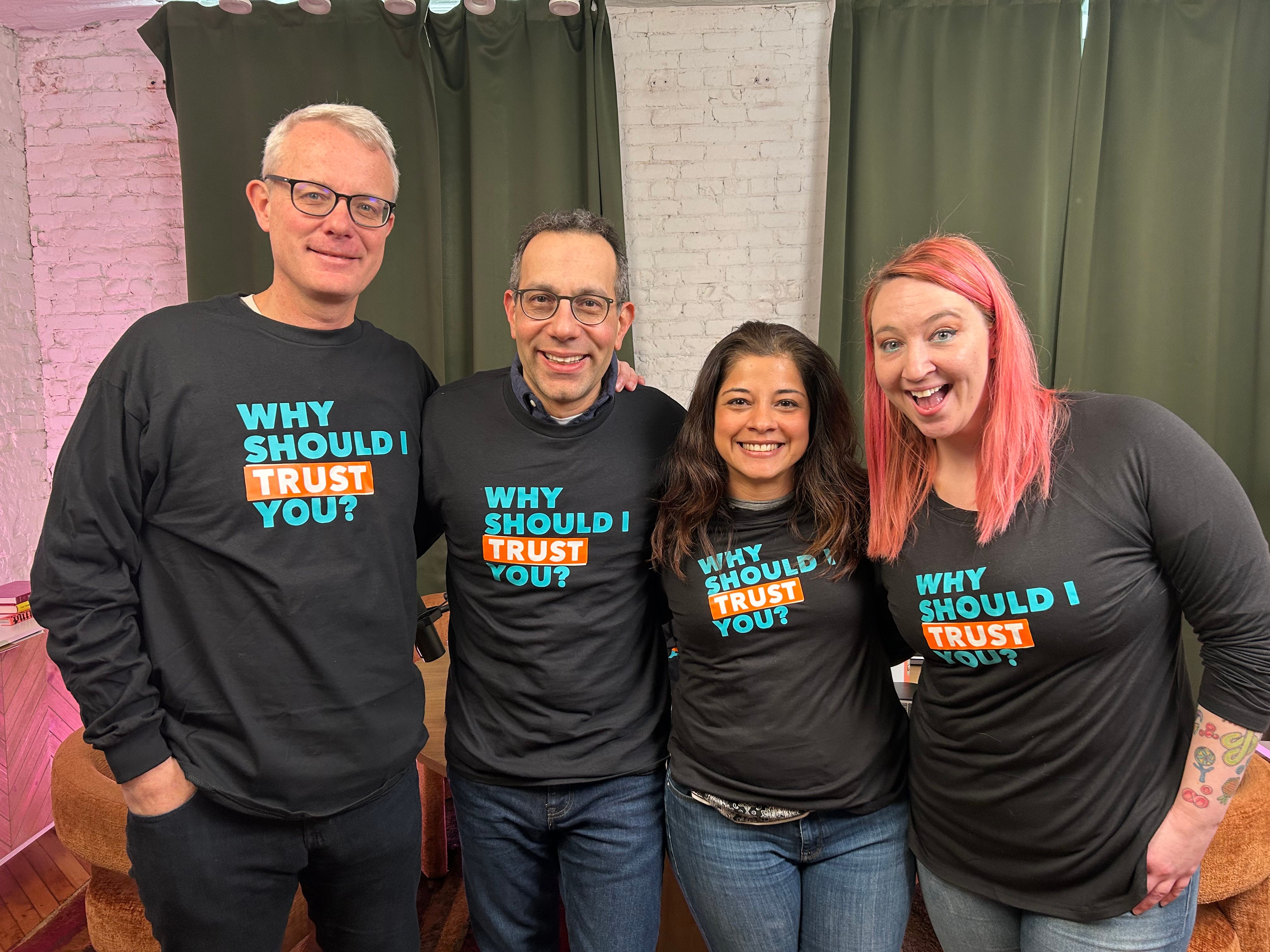
Thanks for sharing your thoughts, Brinda! Personally I do not worry about you “platforming” a fringe voice. As you’ve noted, WSITY doesn’t have the reach of major platforms (e.g., Rogan, legacy news, etc.). If y’all did maybe that’d be a fair critique but I never really interpreted live fact checking as the purpose of the pod. Of course there are probably moments that you’d want back, but many of the characters that I really disagree with get far less pushback than your team gives.
Quite frankly I would never go out of my way to listen to 1.5+ hours of many of the guests y’all have had (Malone, Bigtry, et al.) if they weren’t on your pod. The episodes have been informative in terms of hearing the line of reasoning they present. Hearing this reasoning helps me sharpen my own arguments. When you bring on MAHA guests, I often hear people who are hurting. Even though I disagree with their motives, view of science, etc., I do hear people that our system has failed. When you’ve been failed by a system, you’re vulnerable to whoever is out there that will claim they have solutions and cures for you. Being failed by systems is deeply personal to me and why I choose public health (albeit my path and solutions do not look like the ones the people in charge now want).
You know that I struggle with the MAHA movement because of what the leaders have done to my field (and how I feel that the harm done will greatly hamper any solutions we could have for interests that the majority of America hold). I do feel though that WSITY has been an experiment that has been productive. The next phase of this all feels like it involves coalitions coming together and thinking about solutions for the moment we’re in. Being static doesn’t feel like a viable solution. Nor does shouting at each other, or tearing apart the infrastructure we all rely on for safety and our livelihoods. Eager to keep listening and see how people put their plans into action!
Thank you for all that you’re doing. I’ve told my population health students all about this podcast. I think it’s important that we raise the next generation of leaders to think like this- I hope that this initiative stops being “strange” and starts being the approach we use to effectively communicate with the public. We all deserve it. We can’t keep living in these silos and dehumanizing each others opinions. We are missing out on valuable education, compassion for others, and it greatly impacts how the science influences health behavior, outcomes, etc.
I don’t know if you all do this in some way, but have you thought about an after-episode fact-check of sorts? Where you could expand on viewpoints or point your audience to evidence and resources they could review? This could be one way to still cultivate the safe space you’ve done such a fantastic creating and also offer more tangible evidence for skeptics to explore.